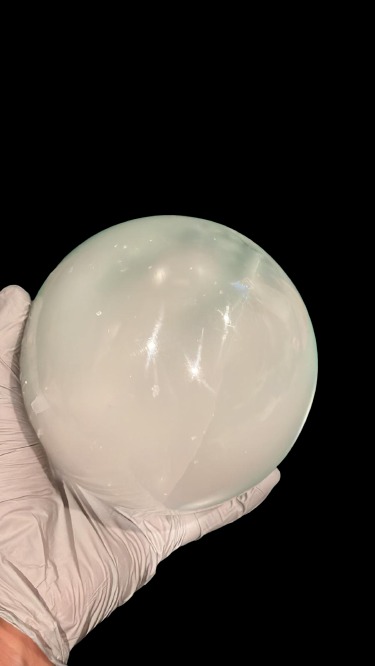
Can selenite go in water? No. Selenite is a form of gypsum, and gypsum dissolves. Roughly two grams of it will disappear into a litre of water at room temperature, which is several hundred times more soluble than quartz. A quick rinse dulls the polish. A long soak pits the surface permanently. Neither can be repaired.
Most crystal pages get this wrong in the same way: they say selenite is self-cleansing, and then suggest rinsing it. Those two ideas have nothing to do with each other, and acting on the second will cost you the stone.
In this guide
- Can selenite go in water at all, even briefly?
- What actually happens when selenite gets wet
- What to do if your selenite already got wet
- Is selenite water safe to drink?
- Selenite, pets and small children
- Five safe ways to cleanse selenite
- Which crystals can go in water, and which cannot
- What if my selenite breaks?
- Frequently asked questions
- Choosing pieces that are easy to live with
- A note on wellness claims
Can selenite go in water at all, even briefly?
Selenite is calcium sulfate dihydrate, written CaSO₄·2H₂O. That water molecule in the formula is a clue: this is a mineral that formed by evaporation, and it has a weak relationship with water from the start.
Two properties decide the outcome. The first is solubility. Gypsum dissolves readily in plain water, while quartz, at the other end of the scale, is effectively insoluble in anything you would find in a kitchen. The second is hardness. Selenite sits at 2 on the Mohs scale, soft enough that your fingernail will mark it. Amethyst and rose quartz sit at 7. That gap is why advice written for quartz is actively dangerous when applied to selenite.
Worth knowing: almost everything sold as selenite, including plates, towers and wands, is strictly satin spar, the fibrous variety of gypsum. True selenite is the transparent, glassy form. The trade has blurred the names for decades, and it changes nothing here, because both are gypsum and both dissolve. A plain description of the whole gypsum family is on geology.com.
What actually happens when selenite gets wet
The damage is progressive, not instant, which is why people get away with it once and then assume it is fine.
Seconds to a minute. A splash leaves a dull patch where the polish was. The surface fibres lift slightly and stop reflecting light evenly. You will probably only notice it in direct light, at an angle.
A few minutes. A proper rinse under a tap takes the sheen off a whole face. Satin spar develops a chalky, matte look. The piece still has its shape, but it no longer catches light the way it did in the shop.
An hour or more. Soaking dissolves material out of the surface. Fibres separate, edges soften, and engraved designs lose their crispness. A plate left in a sink overnight comes out pitted and flaking.
Humidity, over months. This is the slow version nobody warns about. A piece kept in a bathroom, or on a windowsill that gathers condensation, will gradually bloom — a white, powdery film that wipes off and keeps coming back. The stone is slowly weeping. Our guide to whether selenite lamps are safe covers this in more detail, because heat from a bulb makes it worse.
None of this is reversible. Gypsum does not re-polish at home; there is no sealant that restores it, and re-wetting it to “smooth it out” simply removes more material.
What to do if your selenite already got wet
Do not panic, and do not try to dry it quickly.
- Get it out of the water immediately and stand it on a dry towel.
- Blot, do not rub. Rubbing a wet, softened surface drags fibres loose. Press a dry cloth against it and lift.
- Let it air dry slowly, somewhere warm but not hot, for at least 24 hours. A thick piece can hold moisture for days.
- Never use a hairdryer, radiator or oven. Gypsum loses its water of crystallisation when heated, which makes it crumble. Fast heat causes more damage than the water did.
- Leave the surface alone afterwards. Dulling is cosmetic. The piece is structurally fine and still perfectly usable.
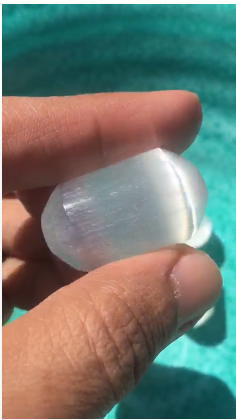
If the piece has gone chalky, a dry soft brush, the kind used for camera lenses, lifts the powder without scratching. That is the only maintenance selenite ever needs.
Is selenite water safe to drink?
Short answer: do not make it, and do not drink it.
First, a point of confusion worth clearing up, because it sends people to the wrong conclusion in both directions. Selenite the mineral has nothing to do with selenium. The name comes from Selene, the Greek goddess of the moon, and refers to the stone’s moonlit sheen. There is a separate chemical called sodium selenite, which is a selenium compound and genuinely is harmful in excess. They are unrelated substances with confusingly similar names.
So selenite is not secretly poisonous. Calcium sulfate is common and unremarkable; it is even used to set tofu. The reasons not to drink the water are different:
- A mineral specimen is not food grade. Natural gypsum carries clay, iron oxides and whatever else was in the ground with it, plus whatever the piece has picked up sitting on a shelf.
- You are destroying the stone to make it. Every glass costs you surface.
- There is no evidence that water does anything different for having had a rock in it.
If you like the ritual of crystal-charged water, use the indirect method: seal the water in a glass bottle or jar, and stand the bottle on or beside the stone. The stone stays dry, the water stays clean, and the practice is unchanged. A charging plate works well as a stand for exactly this.
Selenite, pets and small children
Selenite is soft, which means it chips, and chips get swallowed.
If a dog or cat eats a piece, the concern is not poisoning but obstruction and sharp edges, and that is a conversation for your vet rather than a blog. Call them, say roughly how much is missing and how big the animal is, and follow what they tell you.
For prevention, keep tumbles and small carved pieces off low tables and out of reach. A lidded bowl or a raised dish keeps a collection together and off the floor, which also stops pieces knocking against each other and chipping in the first place.
Five safe ways to cleanse selenite
In crystal practice, selenite is usually described as self-clearing, which is why it gets used to clear other stones rather than needing clearing itself. That is a tradition rather than a measurable process, and it is worth stating plainly. If you want to mark the occasion anyway, all of these keep the stone dry:
- Smoke. Pass it through incense, palo santo or herb smoke for a few seconds. The oldest method and the least fussy.
- Sound. A singing bowl, a bell, or a tuning fork near the piece. Nothing touches the stone at all.
- Moonlight. A windowsill overnight. Avoid direct sunlight, which fades coloured stones such as orange selenite and, over years, can make gypsum brittle.
- Dry earth or rice. Rest the piece on dry soil or uncooked rice for a few hours. Discard the rice afterwards.
- Intention. Hold it, decide it is clear. For a lot of practitioners this is the whole of it.
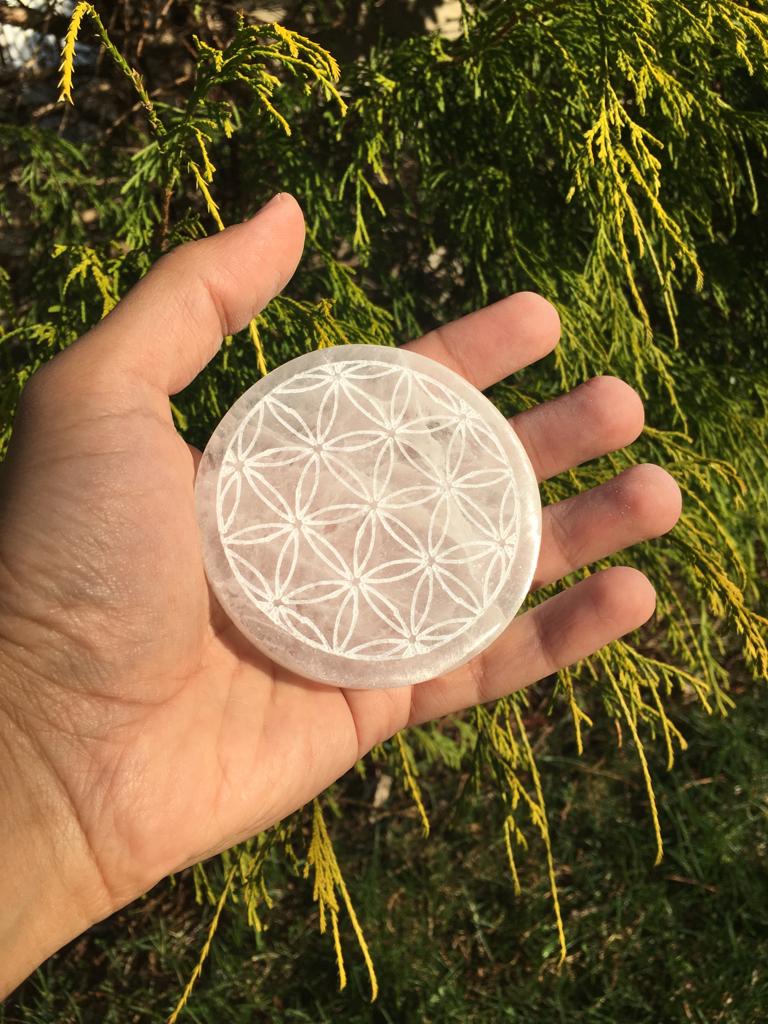
What these have in common is that none of them introduces moisture, salt or abrasion. For a fuller walk through the reasoning, see our piece on what selenite is used for.
Which crystals can go in water, and which cannot
The useful rule is hardness combined with chemistry. Anything below about 5 on the Mohs scale, anything porous, and anything containing metal salts should stay dry.
| Keep dry | Why |
|---|---|
| Selenite and satin spar | Gypsum, dissolves, Mohs 2 |
| Calcite | Soft and reacts with anything acidic |
| Malachite and azurite | Copper-bearing; water leaches them |
| Pyrite and hematite | Contain iron, rust and degrade |
| Lepidolite, celestite, angelite | Soft, flaky or water-reactive |
| Turquoise | Porous, absorbs and discolours |
| Usually fine | Why |
|---|---|
| Clear quartz, amethyst, rose quartz, citrine | Mohs 7, not soluble |
| Smoky quartz, carnelian, agate, jasper | Quartz family, same reasoning |
Even for the second group, brief and occasional is wiser than routine soaking, because cracks and inclusions can hold water and widen with freezing or heat.
What if my selenite breaks?
Softness means selenite breaks more often than most stones, usually along the fibres. There is nothing mystical required of you. In practice people keep the larger piece and use the fragments as pocket stones or grid points, which costs nothing and wastes nothing.
Cyanoacrylate glue will hold a clean break, but the join stays visible because the fibres no longer line up. For a carved piece with sentimental value it is worth doing; for a plain tumble it rarely is.
Frequently asked questions
What happens if selenite gets wet
The polish dulls almost immediately and a chalky, matte patch appears where the water sat. Longer exposure dissolves material out of the surface, separating the fibres and softening engraved detail. The damage is cosmetic rather than dangerous, but it is permanent, and re-polishing gypsum is not something that can be done at home.
Can you drink selenite water
No. A mineral specimen is not food grade and carries whatever impurities came out of the ground with it, and making the water destroys the stone. Selenite is unrelated to selenium despite the similar name. If you want crystal-charged water, seal the water in a bottle and stand the bottle beside the stone instead.
What should I do if my selenite got wet
Take it out of the water, blot it with a dry cloth rather than rubbing, and let it air dry slowly for at least a day. Do not use a hairdryer or radiator, because heat drives out the water held inside gypsum and makes the piece crumble. Once dry, brush off any powder with a soft dry brush.
Can I wear selenite jewellery in the shower
No. Take it off first. Steam and shower spray will dull a polished pendant within a few washes, and soap residue leaves a film that cannot be rinsed away without causing more damage. Selenite jewellery is best treated as going on last and coming off first.
What happens if my dog eats selenite
Ring your vet. The risk is a blockage or a sharp edge rather than poisoning, since calcium sulfate is not especially toxic, but the right answer depends on your animal’s size and how much is missing. Keep small tumbles off low surfaces, as they are the pieces most likely to be swallowed.
Choosing pieces that are easy to live with
If the care rules put you off, pick shapes that forgive handling. Tumbles and palm stones have no fine detail to lose, which makes rhombus selenite tumbles a sensible first purchase and an easy one to keep. Spheres and towers look best away from traffic, where nothing knocks them, and a piece like the six inch polished sphere earns a shelf of its own. If you want to wear selenite, a carved pendant is fine so long as it comes off before the shower.
Every piece is cut and finished by hand from natural selenite, so the fibres and the way each one catches light vary. Orders ship from the US in 1 to 3 business days, wrapped for a stone that genuinely does need wrapping.
A note on wellness claims
Selenite is a beautiful mineral with a long history in spiritual practice, and many people find working with it genuinely meaningful. That said, crystal healing is not supported by scientific evidence, and nothing here is medical advice. Selenite cannot diagnose, treat, cure or prevent any illness. If you are dealing with a health concern, please talk to a qualified healthcare professional — a crystal is a lovely companion to real care, never a replacement for it.

