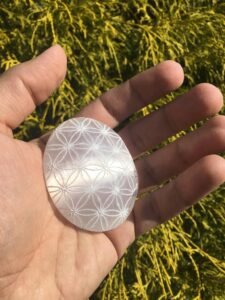
Lay your crystals flat on the plate, leave them for six to eight hours or overnight, and take them off. That is the whole method. A selenite charging plate needs no sunlight, no moonlight, no salt and no water, which is exactly why people reach for one. The details that actually matter are how much fits on a plate, how often to do it, and the one habit that will quietly ruin the stone.
Most guides stop at “put your crystals on it.” That leaves out the part where a 4 inch plate holds far less than you think, and the part where a damp cloth destroys a plate you paid for.
In this guide
- What a selenite charging plate actually does
- How to use a selenite charging plate
- What actually fits on a plate
- The mistake that ruins plates
- Which crystals can go on it
- Building a grid on a plate
- Frequently asked questions
- Choosing a plate you will actually use
- A note on wellness claims
What a selenite charging plate actually does
In crystal practice, selenite is treated as a stone that clears other stones. The belief is that it resets accumulated energy without needing to be cleared itself, which is why it gets called self-cleansing. Practitioners use a flat plate as a resting place: stones go on, stay a while, and come off considered refreshed.
That is a tradition, not a physical process. Nothing measurable happens to a piece of amethyst while it sits on gypsum. Plenty of people find the ritual genuinely useful anyway, as a pause and a way of marking intention, and it is worth saying plainly which part is which.

What a plate does do, practically, is give your stones a home. Crystals left loose in a drawer chip against each other. Soft stones like selenite, fluorite and calcite scratch easily. A dedicated plate keeps a collection in one layer, visible and undamaged, which is a real benefit whatever you believe about energy.
How to use a selenite charging plate
The method takes a minute.
- Put the plate somewhere it will stay. A shelf, a bedside table, an altar. Somewhere dry, and somewhere you will not need to move it.
- Wipe your stones dry with a soft cloth before they go on. Dust and skin oil transfer onto the plate and dull it over time.
- Lay the crystals flat, in a single layer. They should touch the plate, not each other. Stacking does nothing and risks chips.
- Leave them six to eight hours. Overnight is the easiest version to remember. Longer does no harm.
- Take them off and put the plate back. The plate does not need resting, cleaning or charging between uses.
That is it. No timing by moon phase required, though plenty of people like to work to one.
How often
For stones you wear or carry daily, once a week is a sensible rhythm. For pieces that sit on a shelf and are rarely handled, once a month is plenty. After something that felt heavy — a difficult week, a crowded room, an argument in the house — people often clear everything at once, and the plate is the least effortful way to do that.
There is no schedule you can get wrong. Frequency is about your practice, not the mineral.
What actually fits on a plate
This is the part nobody tells you before you buy, and the main reason people end up with a plate that is too small.
| Plate size | Comfortably holds |
|---|---|
| 4 inch | 8-12 small tumbles, or 2-3 palm stones, or one sphere up to about 2 inch |
| 6 inch | 20-25 tumbles, or 5-6 palm stones, or a small cluster, or 2-3 spheres |
| Large carved plate | A full grid layout, or a mixed collection in one layer |
Measure your biggest piece before choosing. A 4 inch plate sounds generous until you set a single large sphere on it and discover there is no room for anything else.
If you mostly work with small tumbles, a flat plate beats a bowl, because tumbles roll into a heap in a bowl and only the top layer touches anything. The 4 inch Tree of Life plate holds a dozen in one layer without them sliding together. For a bigger collection, a 6 inch engraved disc roughly doubles the usable surface.

The mistake that ruins plates
Water.
Selenite is gypsum, calcium sulfate dihydrate, and gypsum dissolves. Not dramatically, but a rinse under the tap etches the polish and a soak pits the surface permanently. There is no repair. The most common way a plate gets destroyed is someone deciding to clean it the way they would clean a dish.
So: never rinse it, never wipe it with a damp cloth, never set a wet crystal on it. Dust it dry with a soft brush or a dry microfibre cloth, and dry your stones before they go on. If a plate lives somewhere humid it can also absorb moisture from the air and develop a chalky bloom, which is the same chemistry at a slower pace. Keep it out of bathrooms.
Selenite is also soft — a 2 on the Mohs scale, so a fingernail marks it. Set stones down rather than sliding them, and keep harder crystals like quartz from being dragged across the surface. Our guide to whether selenite lamps are safe covers the same material cautions in more detail, since they apply to every selenite piece you own.
One more thing worth knowing: almost everything sold as selenite, including charging plates, is strictly satin spar, the fibrous variety of gypsum. True selenite is the transparent, glassy form. The trade has blurred the two names for decades. You can read a plain mineral description of both at minerals.net. It does not change how the plate works, and saying so is simply more honest than most pages manage.
Which crystals can go on it
Almost all of them. A plate is contact-only and dry, so it avoids every risk that sunlight, salt and water create for sensitive stones.
- Safe on a plate: amethyst, which fades in sunlight; malachite and pyrite, which react badly to water; lepidolite, selenite itself, celestite and other soft or flaky stones; anything tumbled, raw or carved.
- Worth a thought: very heavy clusters. Gypsum is soft, so a weighty, sharp-edged piece can mark the surface. Set it on a cloth, or use a sturdier plate.
- Never needs it: the plate itself. Selenite is considered self-clearing in the same tradition that gives the plate its purpose.
This is the reason a plate earns its place even in a small collection. It is the one clearing method with no stone on the do-not-use list.
Building a grid on a plate
An engraved plate doubles as a base for a crystal grid, which is where the carved designs stop being decorative.
Put a focus stone in the centre, arrange supporting stones around it following the engraved lines, and leave it in place for as long as the intention is live — days or weeks, not hours. A Flower of Life plate gives you symmetrical points to work from, which makes an even layout much easier than eyeballing it on a bare surface.
Keep grids on a plate you are not also using for nightly clearing. Dismantling a grid every evening defeats the point of setting one.
Frequently asked questions
How long should crystals stay on a selenite plate
Six to eight hours is the usual guidance, and overnight is the easiest way to hit it. There is no upper limit, so leaving stones on the plate between uses is fine and keeps them tidy. Shorter sessions of an hour or two are common when you simply want a reset before working with a particular piece.
Does a selenite charging plate need to be cleansed
In the tradition that makes the plate meaningful, no. Selenite is treated as self-clearing, which is the whole reason it is used to clear other stones. Practically, the plate needs dusting with a dry cloth now and then, and nothing more. Never wash it.
Can you put selenite in water
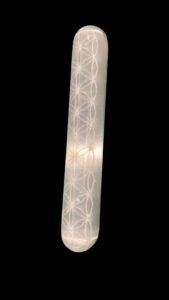
No. Selenite is a form of gypsum and dissolves in water. A rinse dulls the polish and a soak pits the surface permanently, with no way to restore it. This applies to plates, wands, lamps and every other selenite piece. Dust it dry instead.
What is the difference between a selenite plate and a bowl
A plate holds stones in a single flat layer, so every piece is in contact and visible. A bowl gathers them into a heap, which looks lovely but means only the top stones sit against the selenite. Use a plate for clearing and grids, a bowl for display and storage.
Can you use a selenite plate for jewellery
Yes, and it is one of the more practical uses. Rings, pendants and bracelets sit flat on the surface overnight and stay untangled. Dry metal only — moisture is the one thing to keep away from the plate, so take jewellery off well before it goes on.
Choosing a plate you will actually use
If you are buying your first one, size is the decision that matters. Count the stones you want to clear at once, then pick a plate that holds them in one layer with room to spare. A 4 inch Tree of Life plate suits a pocket collection and a bedside table. A 6 inch Metatron’s Cube disc is the one to get if you own more than a handful of tumbles or want space to build a grid. If you would rather display than clear, a charging bowl keeps a collection together on a shelf.
Every plate is cut and finished by hand from natural selenite, so the engraving and the grain vary piece to piece. Orders ship from the US in 1 to 3 business days.
A note on wellness claims
Selenite is a beautiful mineral with a long history in spiritual practice, and many people find working with it genuinely meaningful. That said, crystal healing is not supported by scientific evidence, and nothing here is medical advice. Selenite cannot diagnose, treat, cure or prevent any illness. If you are dealing with a health concern, please talk to a qualified healthcare professional — a crystal is a lovely companion to real care, never a replacement for it.